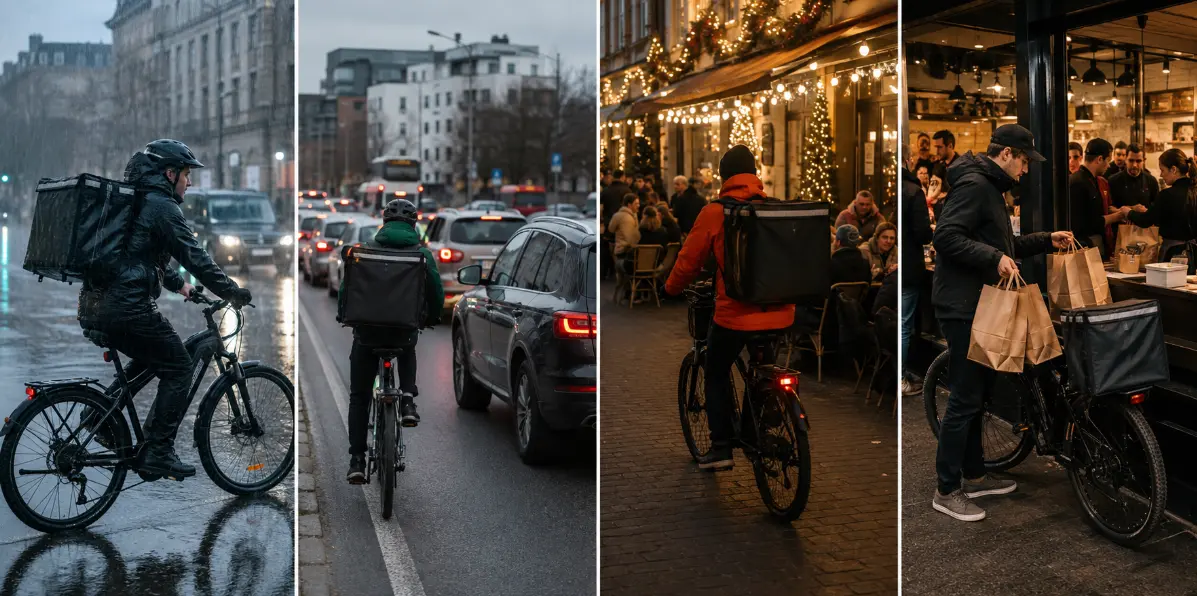
Bad weather often raises customer demand because more people choose delivery instead of walking or driving to restaurants. Wolt’s Polish partner help centre says that when it rains, Poland becomes “a little extra hungry” and more orders come in than usual; it also notes that order pricing can reflect factors such as distance, active order volume, pickup and drop-off points, weather and other variables.
Rain, snow, wind and cold can also reduce the number of active couriers, so the same district may produce more orders per available courier. The trade-off is speed and safety: wet roads, tram tracks, poor visibility and longer restaurant preparation times can reduce deliveries per hour if the courier chooses the wrong vehicle or takes risky routes.
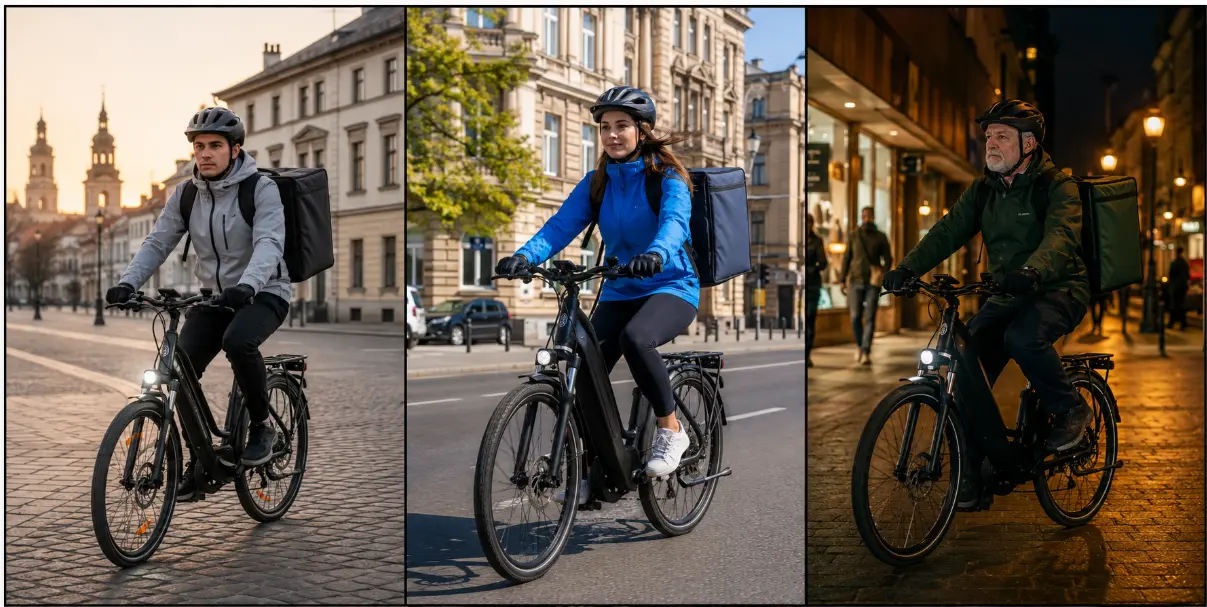
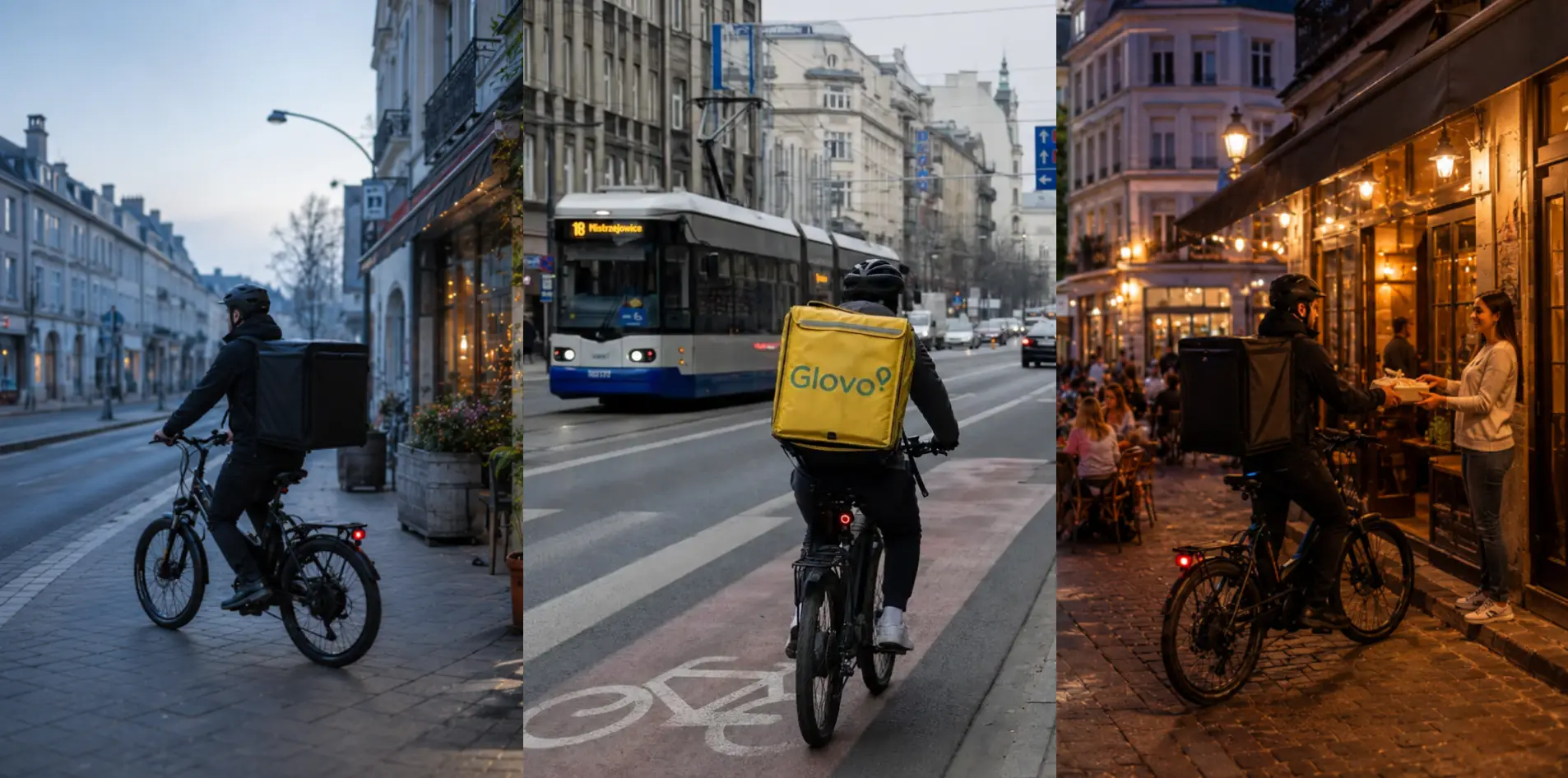
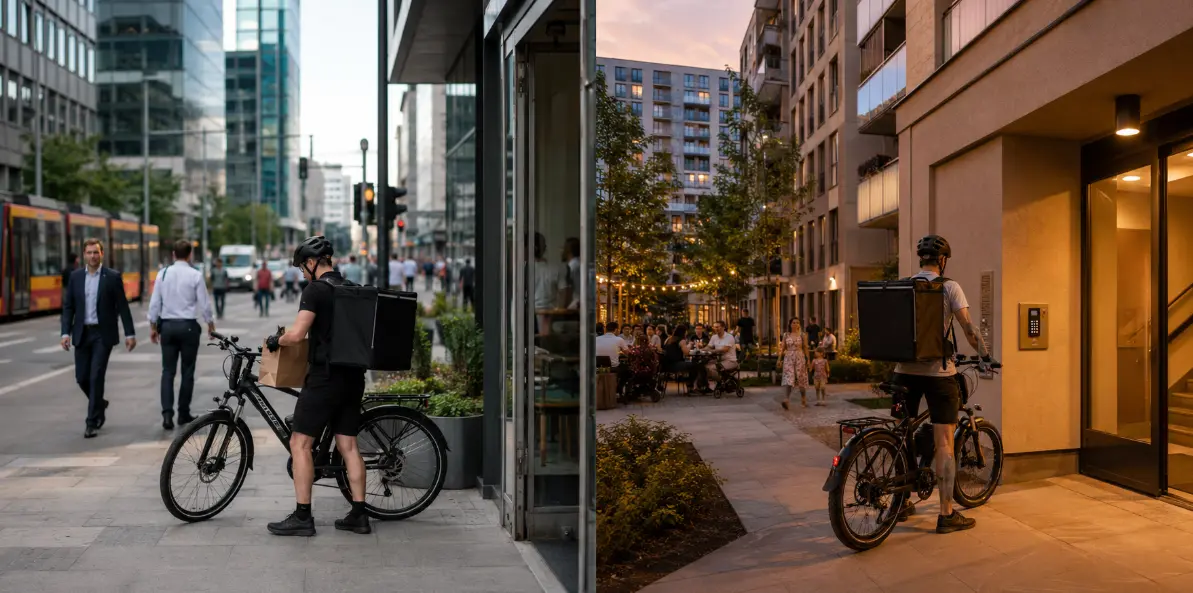
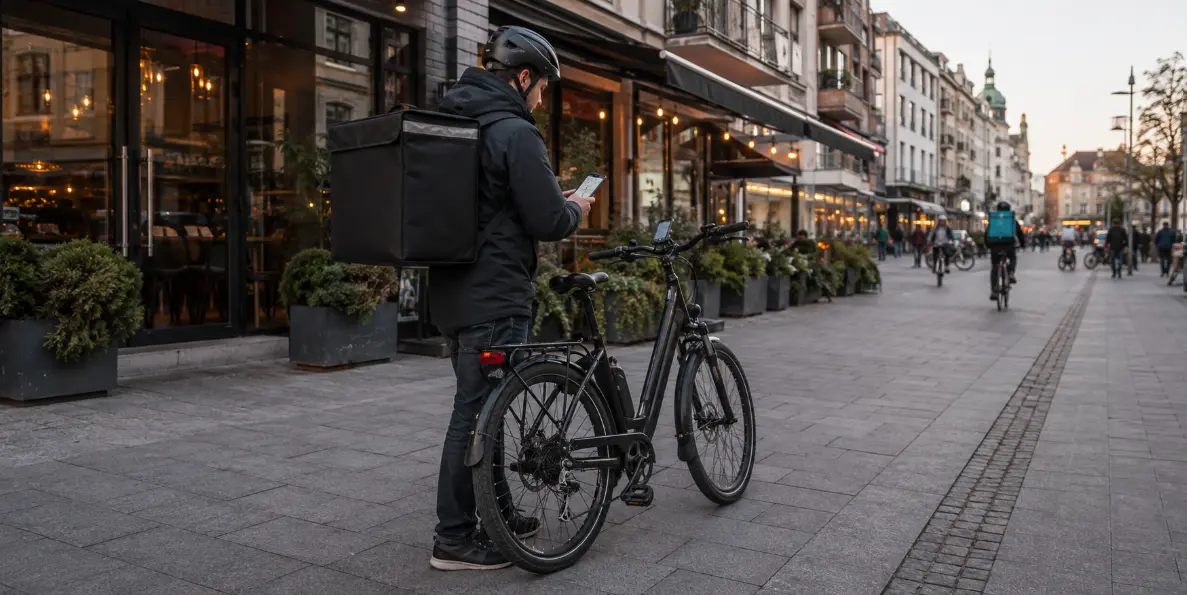
City traffic matters most in the evening. Police data for Małopolskie showed a daily increase in road accidents from 05:00 to 18:00, with the strongest concentration between 16:00 and 18:00. For couriers, this means the start of the dinner peak can be profitable but slower by car in congested corridors; bikes, e-bikes and scooters may perform better in compact central zones if conditions are safe.
Public holidays and Sunday trade restrictions also affect customer behaviour. Polish government information confirms that retail trade is restricted on Sundays and public holidays, with statutory exceptions, and the official list includes dates such as 1 January, 6 January, Easter Monday, 1 May, 3 May, 15 August, 1 November, 11 November, 25 December and 26 December. Closed shops can move some demand toward food, grocery and convenience delivery, especially in the evening before and during long weekends.
Promotions inside delivery apps can create temporary spikes that do not follow the normal daily rhythm. A discount campaign, free-delivery offer, restaurant festival, sports match or payday weekend can make a usually average district better than the city centre for two or three hours.